Guides for better software decisions.
Practical guidance on custom software, AI automation, integrations and product engineering, written from problems that appear while designing and operating real software rather than generic trend summaries.
How to decide when to build, estimate scope and compare custom systems with off-the-shelf products.
Explore topic →03 guidesAI & automationUse cases, architecture, controls and measurement for production-grade AI and automation.
Explore topic →03 guidesProduct engineeringInternal systems, domain models, workflows, authorization and product evolution.
Explore topic →02 guidesIntegrationsConnect channels, CRM and business systems without creating more manual coordination work.
Explore topic →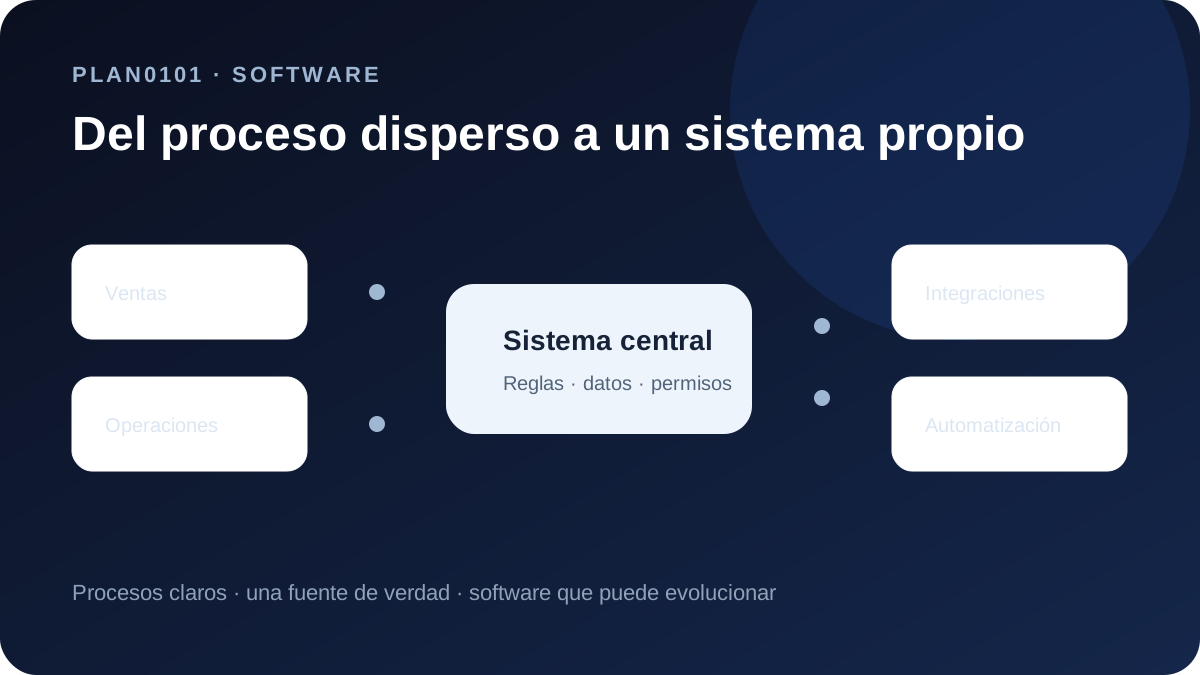
Custom software development for US businesses: how to choose a remote partner
A practical guide for US companies evaluating remote custom software development: scope, ownership, communication, security, milestones, pricing and handoff.
Read guide →Custom software budget: what a proposal should include before you compare price
A practical framework for comparing custom software proposals across scope, integrations, QA, infrastructure, documentation, ownership and recurring costs.
Read guide →How to migrate spreadsheets into internal software without disrupting operations
A practical approach to replacing critical spreadsheets with internal software, permissions, data migration, integrations and traceable workflows.
Read guide →Custom software for SMBs: when it makes sense and when it does not
A decision framework for SMBs choosing between custom software, SaaS, integrations and automation before committing to a build.
Read guide →How to choose a custom software development company
A buyer-focused framework for evaluating custom software companies by discovery, architecture, security, delivery, documentation and production readiness.
Read guide →How long does custom software development take?
A practical way to estimate custom software timelines based on workflow scope, data, authorization, integrations, QA and staged delivery.
Read guide →Custom software development cost: what actually drives the budget
A practical framework for understanding custom software cost, comparing proposals and reducing implementation risk without cutting the product's core value.
Read guide →Custom software vs SaaS: when to build and when to buy
A practical framework for choosing custom software or SaaS based on workflows, integrations, data, total cost and operational advantage.
Read guide →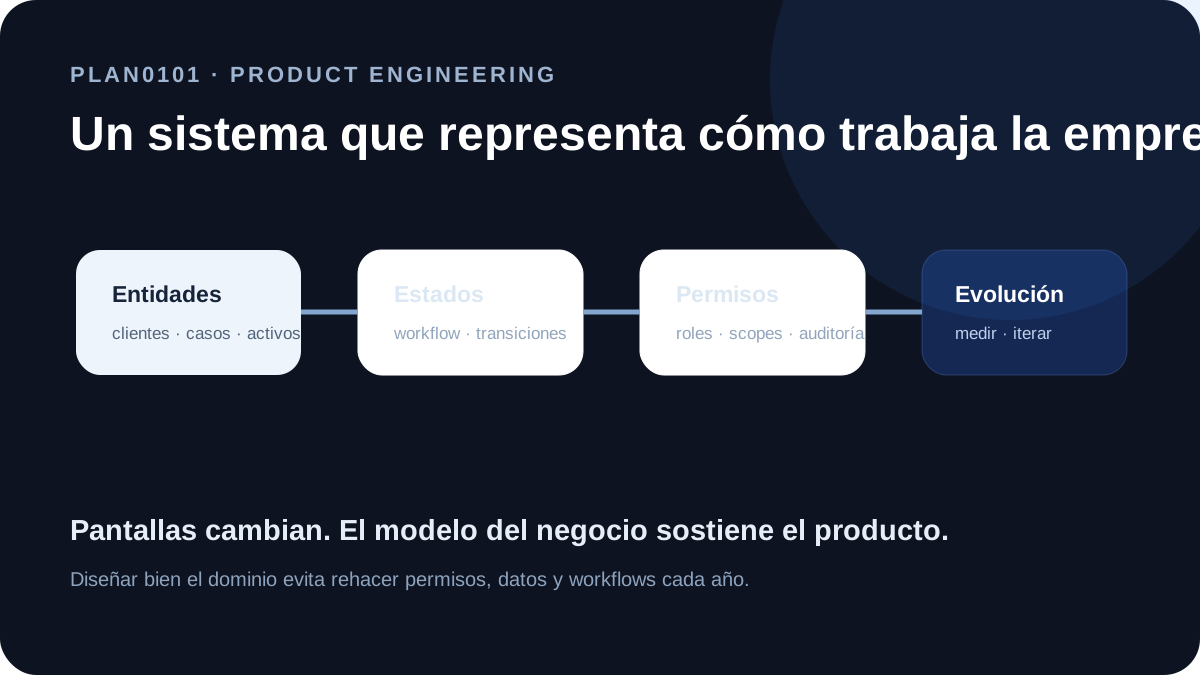
How to modernize legacy software without disrupting operations
A staged modernization strategy for legacy systems covering risk, interfaces, data, permissions, observability and gradual migration.
Read guide →Custom internal business software: when generic tools stop fitting the operation
How to decide whether your company needs a custom internal system to replace spreadsheets, manual workflows and disconnected SaaS tools.
Read guide →How to design internal operations software that can scale
A practical architecture guide for internal software: roles, data models, workflows, integrations, audit trails and maintainable growth.
Read guide →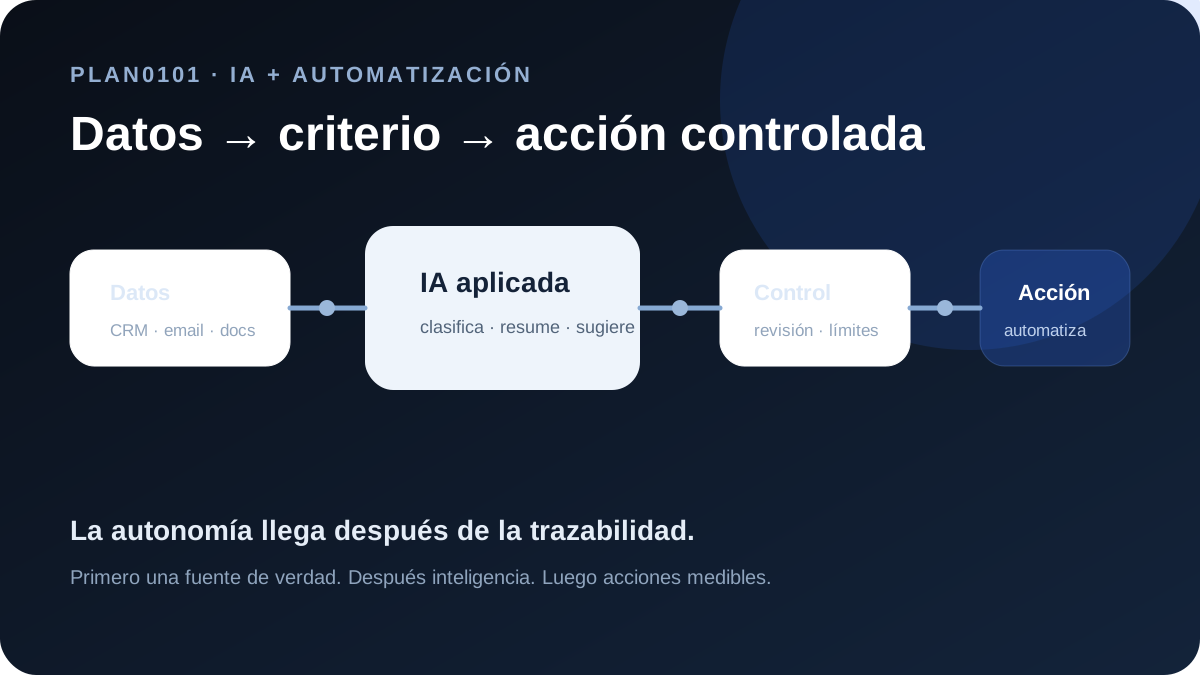
Business process automation: a practical production guide
How to design business automation with events, rules, integrations, AI, human approval, retries, exception handling and measurable outcomes.
Read guide →LLM observability: cost, latency, errors and evaluations in production
What to observe when LLM applications reach production: requests, tokens, cost, latency, providers, errors, budgets, evaluations and incidents.
Read guide →AI sales automation: how to automate pipeline work without losing control
A practical architecture for AI-assisted lead routing, follow-up, pipeline signals and sales operations with reliable context and human control.
Read guide →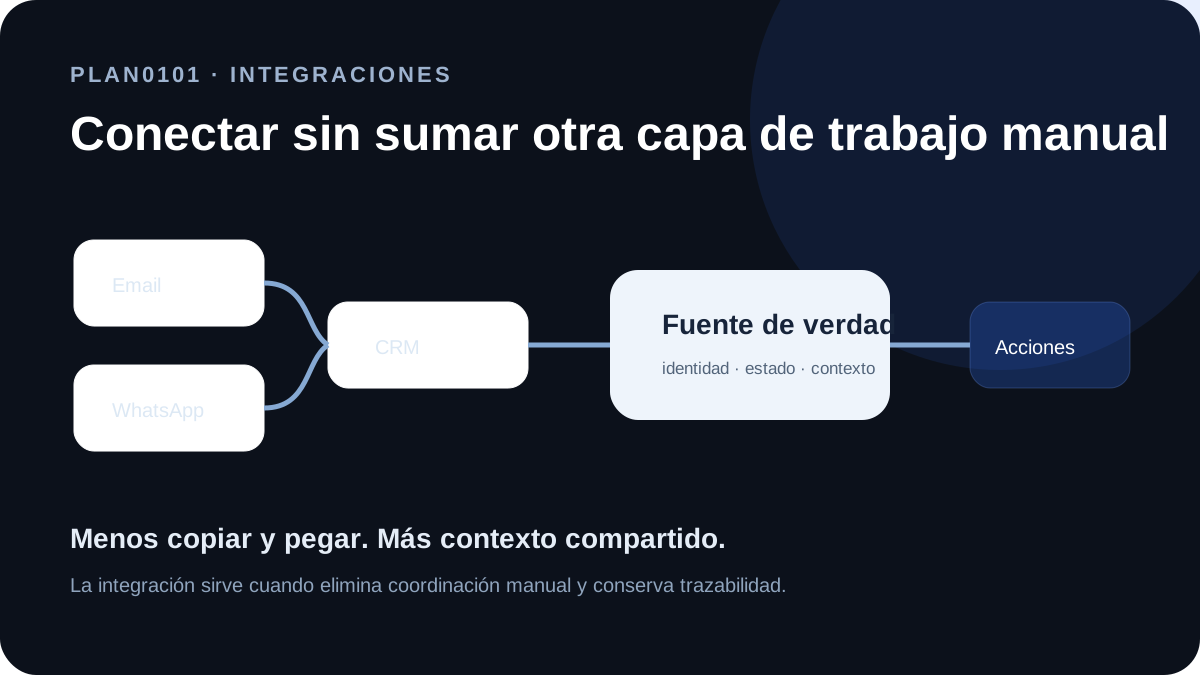
How to eliminate duplicate entry across CRM, email and messaging integrations
Patterns for connecting CRM, email, messaging and internal systems with identity, events, webhooks, retries and explicit sources of truth.
Read guide →How to integrate CRM, email and WhatsApp without losing customer context
Architecture patterns for unifying customer conversations, leads and activity across CRM, email and messaging without fragile synchronization.
Read guide →