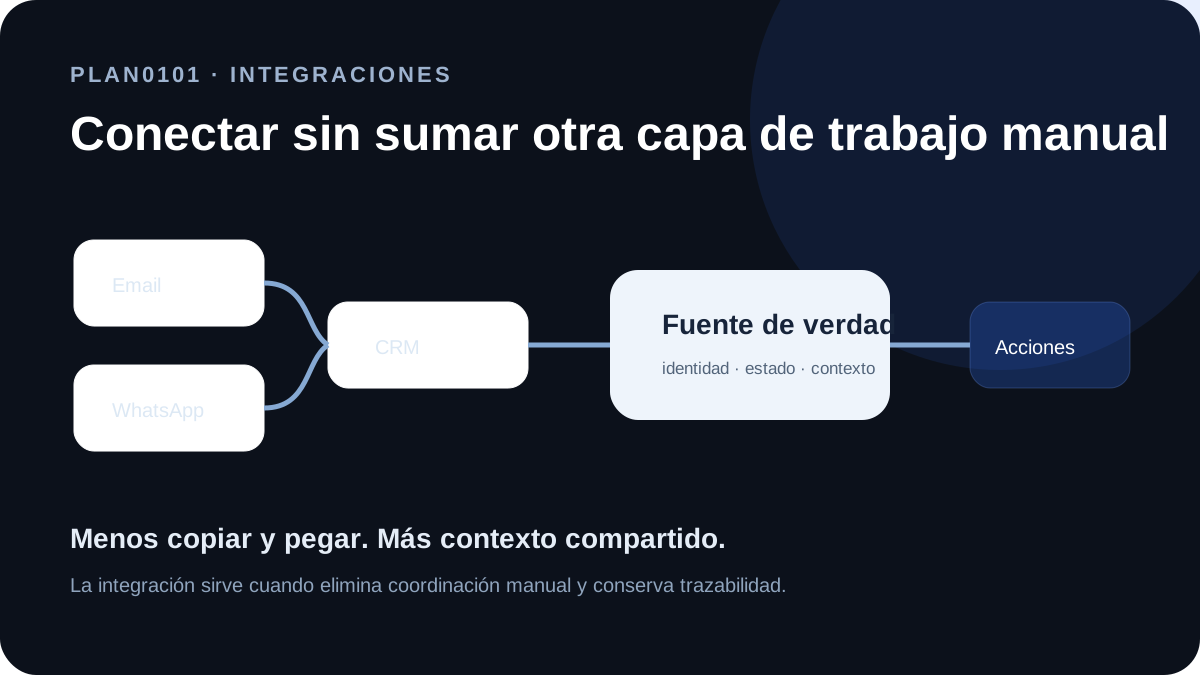
Duplicate entry is a symptom of fragmented state
When conversations live in one channel, commercial status in CRM and next actions in a spreadsheet, a person becomes the integration layer. They copy data, reconstruct context and remember which system must be updated.
The goal is not to connect APIs for their own sake. Define what information each tool needs and which system owns contact, opportunity, conversation, task and outcome state.
- Stable customer or lead identity.
- Authoritative system for each entity.
- Events that trigger synchronization.
- Conflict and duplicate rules.
- Visible integration status.
Design events instead of invisible automation chains
A reliable automation knows what happened, what should happen next and what to do if a destination does not respond. Events and webhooks separate state change from downstream actions.
They also make safe retry possible. If a provider fails, the system can keep a pending event and process it later instead of losing the update or depending on a person to notice.
- Idempotency to avoid duplicates.
- Bounded retries.
- Error and pending-state records.
- Queues for asynchronous work where appropriate.
- Alerts for failures requiring intervention.
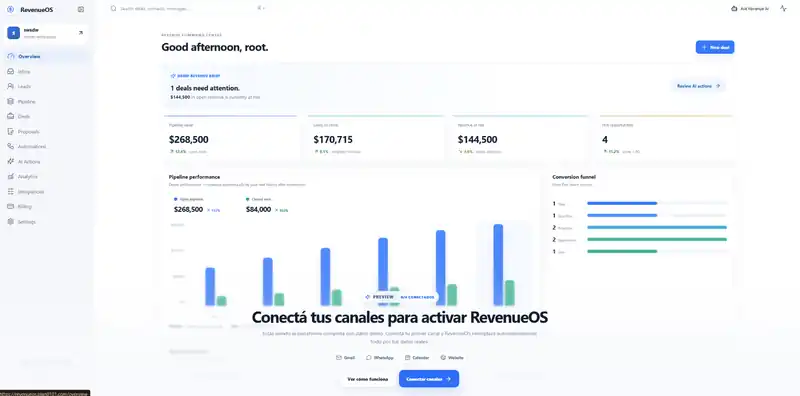
Unify context without copying everything everywhere
Integration does not require replicating every field. Share only the data each system needs and preserve stable references to the source.
In sales, an operating layer can combine conversations, opportunities and next actions while CRM remains the commercial source of truth and email remains the channel. CloserWin follows this principle: connected context for execution rather than indiscriminate duplication.
- Define minimum fields per integration.
- Preserve external identifiers.
- Avoid unnecessary bidirectional sync.
- Record when and why data changed.
- Keep a readable operational history.
Measure whether the integration actually removes work
A technically connected integration can still fail to solve the business problem. Useful metrics include how many manual steps disappear, how long context reconstruction takes and how many cases stop being lost because systems stay aligned.
Count current re-entry points and map where the workflow breaks before building. Then automate that complete path and verify whether the team stops compensating with spreadsheets and internal messages.
- Fields re-entered per case.
- Time required to reconstruct context.
- Cases without follow-up.
- Errors caused by stale information.
- Synchronization incidents.
Frequently asked questions
Should CRM, email and messaging sync everything?
No. Define ownership for each data type and share only the context required by each workflow.
What happens when an external API fails?
The integration should record the failure, retry safely and alert when human intervention is required, without losing or duplicating actions.
Do we need to replace our CRM?
Usually not. A focused operating layer or integration can often connect CRM with the channels and workflows where context is currently lost.
Connect the workflow before adding another tool
PLAN0101 can map system ownership and identify which integrations actually remove duplicate work.
Discuss the integration