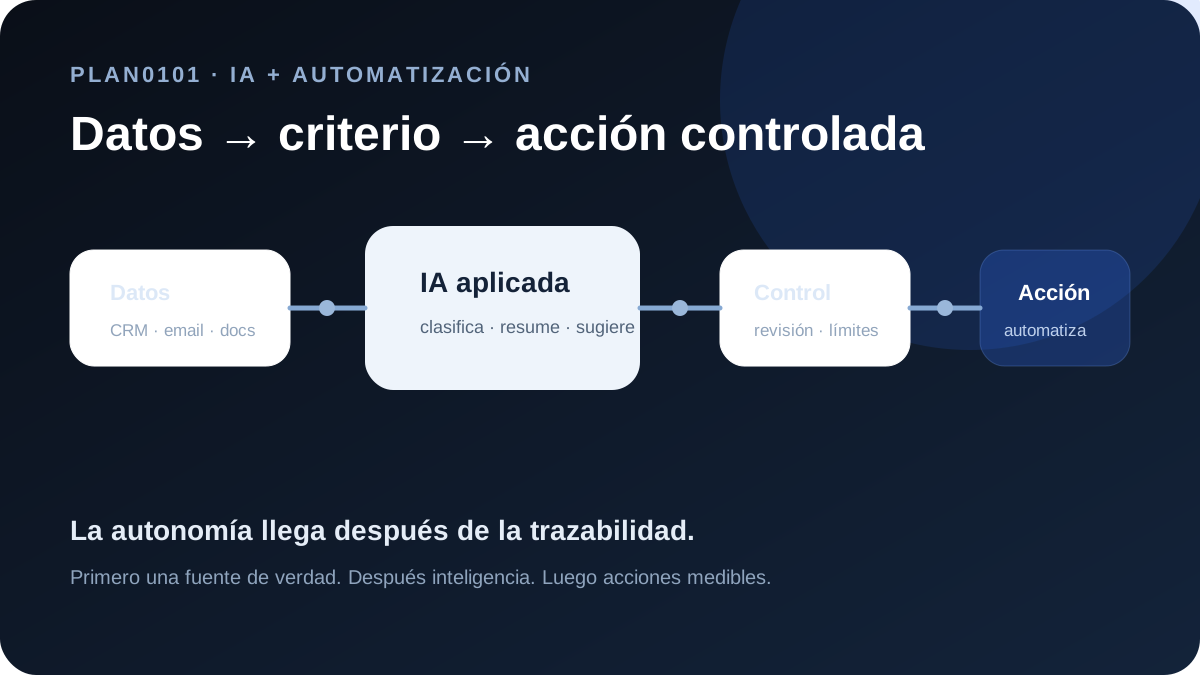
Production automation includes the failure path
An automation is not complete when a trigger causes an action. It needs validation, ownership, exception behavior, retries and evidence. At PLAN0101 we use a six-part frame: event, context, decision, action, exception and evidence. Missing one of those pieces usually means the workflow still depends on implicit human knowledge.
This model works for deterministic automation and AI-assisted workflows because it separates the business process from the implementation technique used at each step.
- Event that starts the workflow.
- Context required to decide.
- Decision rules or model output.
- Action that changes state.
- Exception path when assumptions fail.
- Evidence recorded for audit and learning.
Prioritize high-volume, reviewable work
Strong first candidates are frequent, measurable and relatively stable. Data entry, classification, reminders, follow-up, document preparation and recurring reports usually provide better early learning than a high-impact decision that is hard to reverse.
A practical prioritization matrix compares volume, minutes per case, variability and cost of error. High-volume work with controlled downside tends to be the best place to start.
- Data synchronization.
- Follow-up and reminders.
- Email or ticket classification.
- Document and draft generation.
- Operational alerts.
- Recurring reporting.
Use AI where interpretation is actually required
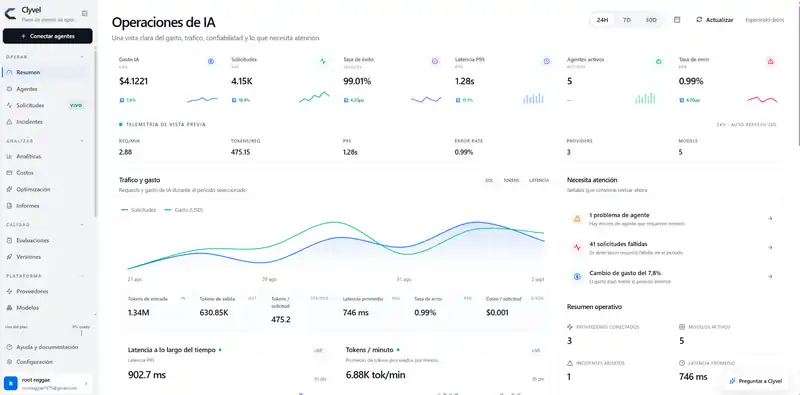
AI is valuable for language, extraction, summarization, classification and recommendations. Deterministic rules remain better for conditions that need predictable behavior. Mature systems combine both rather than turning every step into a model call.
Autonomy can also progress in stages: suggest, require approval, then automate low-risk actions after quality is measured. This preserves control while the system earns trust.
- Rules for deterministic logic.
- Models for ambiguous language tasks.
- Human review for sensitive actions.
- Stable evaluation cases.
- Logs that explain what the system did.
Measure business outcome and error operations
Execution count is not a success metric. Measure time saved, percent of cases completed without intervention, correction rate, integration failures and time to detect an exception. For customer-facing processes, add outcome metrics such as response time or follow-up coverage.
The goal is a better process, not a larger number of automated actions.
- Minutes saved per case.
- Automation completion rate.
- Manual correction rate.
- Retry and integration failure rate.
- Mean time to detect and resolve exceptions.
Frequently asked questions
What should a business automate first?
A frequent, measurable process with stable rules and errors that can be detected or reversed without high impact.
Does business automation always require AI?
No. Many workflows are better handled with events, rules and APIs. AI adds value when the task involves language, ambiguity or unstructured information.
How do you prevent fragile automation?
Define source of truth, validation, idempotency, retries, exception visibility, logging and a human intervention path.
Choose the first workflow with measurable impact
PLAN0101 designs automation around the full operating process, including controls, exceptions and measurement.
Explore AI automation