Useful sales automation starts before generated outreach
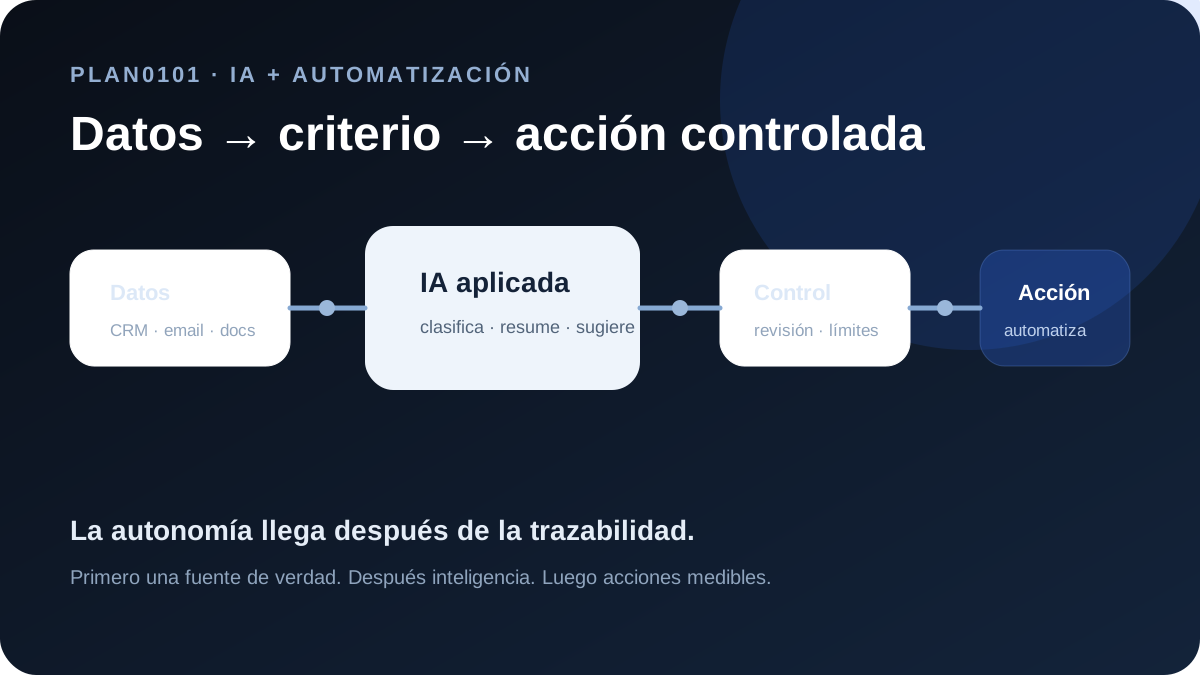
AI sales automation is not simply an email-writing feature. The larger opportunity is a system that understands the state of each opportunity, identifies what needs attention and prepares or executes the next step using real business context.
That requires channels, CRM data and operating rules to work together. A lead may originate from a form, email, messaging channel or campaign; the system needs to identify it, connect it to an account and opportunity, record activity and decide who should act.
- Lead capture and deduplication.
- Intent and opportunity classification.
- Detection of unanswered conversations.
- Context-aware follow-up drafts.
- Alerts for stalled opportunities.
Automate the reversible work first
Good first automations are repetitive and easy to review: filling missing fields, summarizing conversations, creating reminders or highlighting deals with no recent activity. Teams already understand the desired outcome and can quickly tell whether the system is helping.
High-impact decisions such as exceptional discounts or contractual commitments need stronger controls. A gradual design lets AI suggest first, execute low-risk actions later and gain autonomy only where quality remains measurable.
- Conversation summaries.
- Suggested next actions.
- Lead prioritization from observable signals.
- Task and reminder creation.
- Draft responses for approval.
Context is the core infrastructure
A generated response can sound convincing and still be wrong if the system does not know deal stage, proposal history, account ownership, restrictions or the most recent conversation. A reliable solution needs a commercial data model before it automates communication.
The same applies to pipeline intelligence. Automated activity is not evidence that a deal advanced. Stage changes and risk signals should map to observable business events and remain auditable.
- Permission-aware conversation history.
- Explicit stage criteria.
- Owner and next action.
- Proposals and documents linked to the deal.
- Logs for AI-generated or AI-executed actions.
Measure commercial quality, not automation volume
The goal is not to maximize messages sent. Useful metrics include response speed, opportunities with a defined next step, administrative time per rep, follow-up coverage and the acceptance rate of AI recommendations.
If automation reduces manual work but creates irrelevant outreach or incorrect records, it is not improving the sales operation. Efficiency and commercial quality have to be measured together.
- Time to first response.
- Deals without activity or a next step.
- Administrative hours per representative.
- Recommendation acceptance or edit rate.
- Reverted or incorrect automated actions.
Frequently asked questions
Can AI respond to prospects automatically?
Yes in controlled scenarios, but many teams should start with drafts or low-risk actions and expand autonomy only when context, permissions and quality measurements are reliable.
Do I need to replace my CRM?
Not necessarily. An automation layer can work with an existing CRM. Replacement becomes relevant when the CRM data model itself no longer represents the way the sales operation works.
Which sales channel should be automated first?
Start with the channel that has meaningful volume and reliable activity data, while ensuring interactions are still associated with the same account and opportunity model.
Build an AI-assisted sales operation, not an isolated bot
CloserWin and PLAN0101 custom systems connect pipeline state, conversations and automation around the commercial workflow.
Explore CloserWin