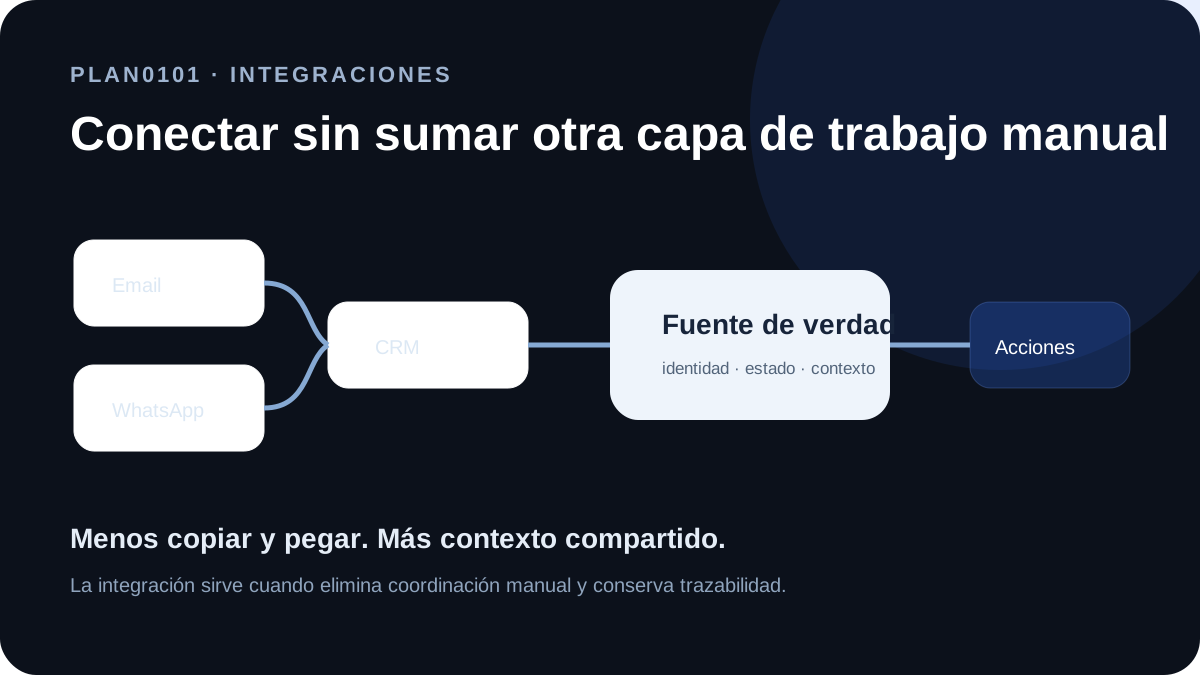
The hard part is identity, not API connectivity
A company can connect CRM, email and messaging APIs and still lose context. The real problem is determining that a message, contact and opportunity belong to the same commercial relationship when activity arrives from different channels.
That requires an identity model and explicit deduplication rules. Email, phone, company domain and existing records provide signals, but ambiguous matches need a safe resolution path because an incorrect merge can be worse than a duplicate.
- Separate person and company identity.
- Define deterministic deduplication rules.
- Maintain a shared activity timeline.
- Assign a source of truth for important fields.
- Review uncertain identity matches.
Prefer business events over copying every field everywhere
Trying to synchronize every system bidirectionally creates loops and conflicts. A more stable design defines meaningful events such as lead created, message received, stage changed, meeting booked or proposal sent. Each integration reacts according to its responsibility.
Specialized systems can remain specialized. The CRM may own the opportunity, the conversation layer may own full message history and an automation layer may decide what action should happen next.
- Define business events.
- Avoid unnecessary two-way synchronization.
- Use stable identifiers.
- Log failures and retries.
- Make handlers idempotent.
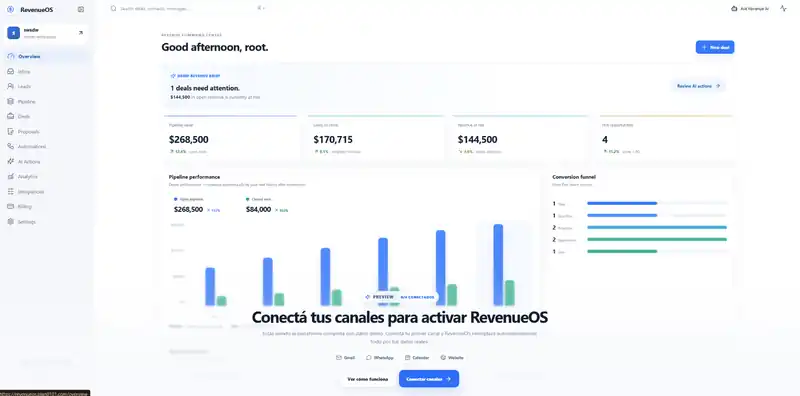
Automation should read consolidated state before acting
Once channels share context, automation can reason about the latest conversation, deal stage, owner and next action. That enables useful behaviors such as highlighting overdue follow-up, classifying a request or preparing a response draft.
A time-based rule that sends a message after three days can fail if the prospect already replied through another channel. The automation layer should check the consolidated state immediately before executing an action.
- Read activity across channels.
- Cancel automations when state changes.
- Respect ownership and permissions.
- Log which rule executed an action.
- Allow manual intervention without breaking the workflow.
Measure whether people stopped acting as middleware
Success should appear in the operation, not only in an integrated inbox. Track conversations without an account or deal, duplicates created by different channels, follow-ups missed and manual steps required to keep records current.
A strong integration reduces copy-and-paste work, search for context and disagreements about which system contains the correct data. Those are concrete signals that architecture is improving the workflow.
- Unassociated conversations.
- Cross-channel duplicate records.
- Delay between activity and system state.
- Overdue follow-ups.
- Integration failures and retries.
Frequently asked questions
Should every message be copied into the CRM?
Not always. The CRM needs enough context for the commercial workflow, while a dedicated conversation layer may store the full message history. Reliable association and traceability matter more than duplicating every payload.
Can WhatsApp Business be integrated with a custom system?
Yes, using the appropriate official channels and providers. The design should account for identity, templates, delivery state, permissions and provider constraints.
What if a customer uses both email and messaging?
Both should connect to the same person and opportunity when identity confidence is high. Ambiguous matches should be reviewed rather than merged automatically.
Connect channels around the commercial workflow
PLAN0101 can design the layer between conversations, CRM data and automation without replacing tools that still work well.
Explore revenue operations